
PRODUCTS
Focus On High-Quality Silicate (Ceramic) Materials
Ceramic Body Binder FG-ZM01: 30–70% Green Strength Enhancer for Ceramic Bodies
Product Model:
FG-ZM01, FG-G301, FG-G303
Keyword:
Ceramic Body Binder FG-ZM01: 30–70% Green Strength Enhancer for Ceramic Bodies
PRODUCT DETAILS
Goway Ceramic Body Binder (FG-ZM01) is an organic polymer co-polymer additive engineered to increase green (unfired) ceramic body strength while simultaneously improving slurry flow and spray-drying granule quality. Unlike lignin- or cellulose-based binders, FG-ZM01 remains stable long-term in slurry, does not produce sandwich or black-core defects in the fired body, and can reduce deflocculant usage — contributing to measurable energy savings in spray-drying operations.
Chemical Composition & Physical Properties
The following tables show the chemical composition ranges and physical properties for the three product grades. Select a grade based on body formulation requirements and target strength profile.
| Code | Active Ingredient | Main Inorganic Salt By-product | Unreacted Monomer / Oligomer | Residual Raw Materials & Moisture | LOI |
|---|---|---|---|---|---|
| FG-ZM01 | 90-95% | 5-7% | < 2% | Trace | 6-7% |
| Property | Value | Notes |
|---|---|---|
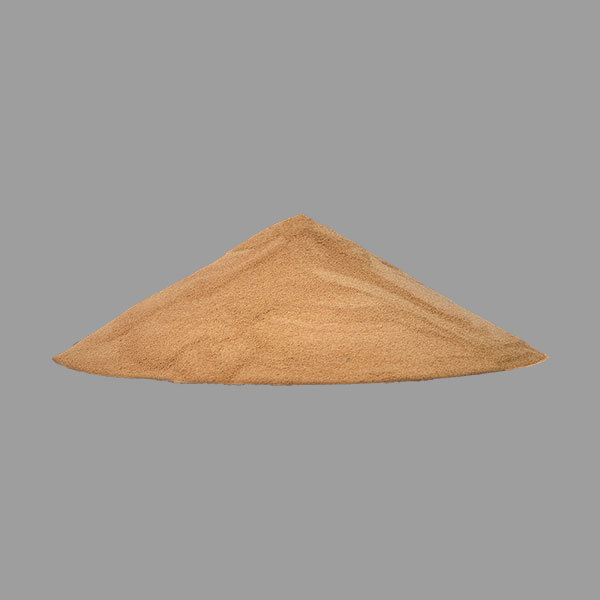
| Appearance | Yellow or brown powder/granule | No odor; low dust |
| Melting Point | 300°C | Burns out cleanly during firing |
| Bulk Density | 0.5–0.6 g/cm³ | Easy to weigh and dispense |
| Solubility | Freely soluble in water | Light yellow-green transparent solution; also alcohol-soluble |
| Stability in Slurry | Long-term stable | No degradation over 24 h (vs. lignin/cellulose binders) |
| Packaging | 25 kg/bag | Plastic film inner + woven fiber outer bag (moisture-sealed) |
| Grade | Typical Dosage | Primary Use Case | Selection Notes |
|---|---|---|---|
| FG-G301 | 0.1–0.2% | Standard floor / wall tile bodies | Higher SiO₂ (65–70%) Good fit for formulas sensitive to LOI budget |
| FG-G303 | 0.1–0.2% | Bodies with higher barren material content | Slightly lower SiO₂ range; moderate L.O.I. General-purpose option |
| FG-ZM01 | 0.15–0.3% | High green strength demand; spray-drying optimization | Recommended for applications requiring 30–70% strength increase and/or granule distribution improvement |
Performance Characteristics
The following performance attributes are documented from Goway in-house testing and field validation. All strength and flow data are indicative; actual results vary with body formula, clay quality, and process conditions.
| Decision Factor | FG-ZM01 Ceramic Body Binder | Lignin / Cellulose-Based Binder |
|---|---|---|
| Green Strength | 30–50% increase at 0.15–0.3% dosage | Variable; often requires higher dosage or formula adjustment |
| Slurry Flow | Maintains or improves flow; Ford Cup flow time improves by 5–10 s in validated applications | May increase viscosity or require extra deflocculant correction |
| Slurry Storage Stability | Long-term stable in slurry, suitable for continuous mill operation | May degrade within 24 hours depending on slurry chemistry |
| Black-Core / Sandwich Risk | No sandwich or black-core defects reported in validated production applications | Higher risk because organic residue may affect burnout behavior |
| Best Fit | Tiles, porcelain, sanitaryware and ceramic bodies with unstable clay quality | Basic body strengthening where firing defects and slurry aging are less critical |
Green Strength Increase: 30–70%
At 0.15–0.3% addition, FG-ZM01 increases ceramic green (unfired) body strength by 30–50%, reducing breakage during pressing, transfer, and early drying stages. _(Goway in-house testing, 2025.)_
No Viscosity Penalty — Flow Improvement
Unlike traditional binders, FG-ZM01 does not increase slurry viscosity. In validated production applications, Ford Cup flow time improved by 5–10 seconds after addition. _(Goway in-house testing, 2025.)_
Spray-Drying Granule Optimization
The 40–80 mesh fraction of spray-dried powder increases significantly while over-fine (<40 mesh) and over-coarse (>80 mesh) fractions decrease. More uniform granule size distribution reduces pressing defects and improves green density. _(Goway in-house testing, 2025.)_
Lower Hollow Granule Rate
Powder bulk density after spray-drying increases measurably, reflecting a lower hollow granule rate. This contributes to more consistent pressing behavior and reduced pin-hole risk in fired bodies.
No Sandwich / Black-Core Defects
FG-ZM01 burns out cleanly at 300°C and does not contribute carbon contamination to the fired body. No sandwich or black-core phenomena have been reported in validated production applications. Contrast with lignin-based binders, which commonly cause this defect.
Reduces Deflocculant Demand
Because FG-ZM01 improves slurry flow independently, the deflocculant (e.g., STPP) dosage can often be reduced. This can lower slurry water content and reduce spray-drying tower energy consumption. Cost Option
Long-Term Slurry Stability
FG-ZM01 remains effective over extended slurry storage periods. Unlike lignin or cellulose binders, which degrade within 24 hours, FG-ZM01 does not decompose in slurry — eliminating time-sensitive addition constraints in continuous mill operations.
Reduces Dependence on Clay Quality
For bodies that use lower-plasticity clays or high barren material ratios, FG-ZM01 compensates for reduced natural binding capacity, broadening the range of acceptable raw material inputs. APPLICATION
| Condition | Ford Cup Flow Time (s) | Green Body Strength (MOR, MPa) |
|---|---|---|
| With Goway FG-ZM01 (0.4%) | 33 | 1.53 |
| With competitor binder (0.4%) | 36 | 1.23 |
| Lower Ford Cup time = better flow. Higher MOR = stronger green body. Test conducted on identical floor tile body formula. Results are indicative; vary with specific formula. Request Goway TDS for detailed test protocol. | ||
Application Scenarios
FG-ZM01 is suitable for a broad range of ceramic body types. The two primary scenarios below represent the highest-value use cases based on field evaluation. Contact Goway for application testing support tailored to your specific body formula.
Scenario A — High Green Strength Demand APPLICATION
Applicable when the production line experiences recurring body breakage during pressing, demolding, transfer conveyor, or early drying — typically linked to insufficient green body strength.
- Body breakage rate >2% at pressing or demolding stage
- Green body MOR below target (e.g., <1.0 MPa for large-format tiles)
- Low-plasticity clay supply, variable raw material sources, or high barren material content (>40%)
- Bodies prone to cracking during drying, especially with fast-drying kiln schedules
- Large-format tiles (≥600×600 mm) or thin-body formulations where mechanical handling stress is amplified
Scenario B — Spray-Drying Process Optimization APPLICATION
Applicable when spray-drying powder shows excessive fines or coarse fractions, high hollow granule rate, or when pressing defects are traced to non-uniform granule size distribution.
- Spray-dried powder over-fine fraction (<40 mesh) >20% by weight
- Powder bulk density below target, indicating high hollow granule proportion
- Pin-hole or lamination defects in pressed tiles traced to granule quality
- Desire to reduce deflocculant (STPP) dosage and lower slurry water content
- Spray-drying tower energy cost identified as a priority reduction target
Scenario C — Replacing Lignin or Cellulose Binders NEW
Applicable when current binder (lignin sulfonate, CMC, or similar) causes sandwich/black-core defects, degrades rapidly in stored slurry, or creates odor and dust issues in the production environment.
- Black-core or sandwich defects in fired body attributed to binder carbon residue
- Binder effectiveness declines after >24 hours in slurry storage
- Slurry viscosity too high with current binder, forcing reduced dosage and insufficient green strength
- Worker health or environmental compliance concerns from binder odor or dust
Industry Insights & Common Considerations
Practical observations from ceramic body binder application across floor tile, sanitaryware, and large-format tile production environments.
A common assumption in ceramic body formulation is that increasing binder content to raise green strength necessarily degrades slurry flow. With traditional organic binders (lignin, CMC), this trade-off is real: viscosity rises with dosage. Organic polymer binders like FG-ZM01 operate through a different mechanism — polymer chain entanglement under drying rather than viscosity-driven adhesion in the wet state — which allows green strength to increase without a flow penalty. _(Goway in-house testing, 2025.)_
FG-G301 and FG-G303 have L.O.I. values in the 6–7% range. When dosing at 0.2% by body weight, the binder's own L.O.I. contributes approximately 0.012–0.014% to the total body L.O.I. — a negligible amount for most tile formulations. For technical ceramics or sanitaryware with tight L.O.I. budgets, FG-G301 (L.O.I. 5–6%) provides a lower-LOI option.
FG-ZM01 grades are hygroscopic. Opened bags must be resealed and stored in a dry environment. Product exposed to significant moisture absorption may cake but retains effectiveness after re-dispersion in water. Do not store near heat sources (ignition risk at elevated temperatures). Follow local flammable materials storage guidelines.
Frequently Asked Questions
What is a ceramic body binder and why is it used?
How does FG-ZM01 compare with lignin-based or cellulose-based (CMC) binders?
What is the recommended dosage of FG-ZM01?
Does FG-ZM01 affect slurry flow or spray-drying performance?
Can FG-ZM01 reduce deflocculant (STPP) usage?
What ceramic body types is FG-ZM01 suitable for?
Does FG-ZM01 leave residue or affect fired body color?
How should FG-ZM01 be added to the slurry?
Related Products
GOWAY INTERNATIONAL MATERIAL CO., LTD
Founded in 2009, we specialize in producing and supplying ,ceramic additives and related products, committing to supplying stable, environmentally friendly,professional and ceramic materials.
Contact UsContact Us
Company Phone/Wechat:86-0757-82131106 / +8613728575572
Company Fax:86-0757-82131106
Whatapp/skype: +8613600032377
E-mail:info6@goway-china.com
Office Address: Room C11-6, Foshan National Torch Innovation and Pioneer Park, Jihua 2nd Road, Chancheng District, Foshan City, Guangdong Province, China.
Factory Address: Nanbian Industrial Zone, Sanshui District, Foshan City Guangdong Province,China.