

PRODUCTS
Focus On High-Quality Silicate (Ceramic) Materials
Sodium Tripolyphosphate---STPP
Product Model:
Keyword:
Sodium Tripolyphosphate---STPP
PRODUCT DETAILS
Ceramic Grade Sodium Tripolyphosphate STPP for Body Deflocculation and Glaze Dispersion
Four grades — FG-1003, FG-N5, FG-N8, FG-N9 — matched to whiteness requirements, pH conditions, and production cost targets across building ceramics, sanitary ware, daily-use ceramics, and art ceramics.
Product Overview
| Product Name | Ceramic Grade Sodium Tripolyphosphate STPP |
| Chemical Name | Sodium Tripolyphosphate |
| CAS No. | 7758-29-4 |
| Molecular Formula | Na₅P₃O₁₀ |
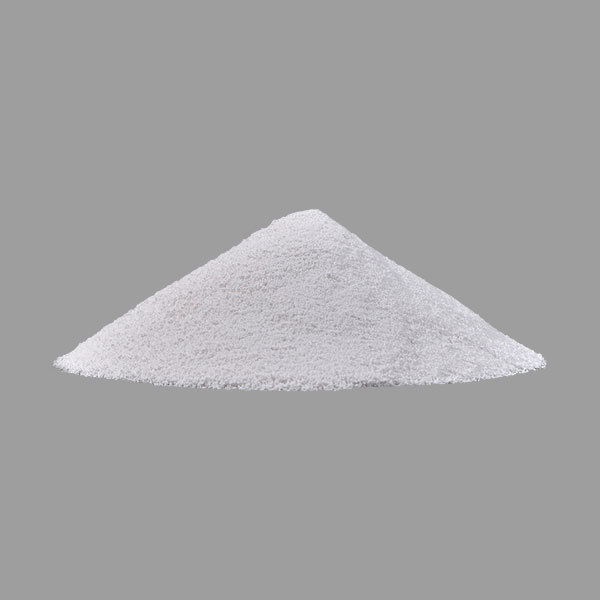
| Appearance | White powder |
| Main Application | Ceramic body deflocculation and ceramic glaze dispersion |
| Recommended Dosage | 0.3%–0.5% based on dry ceramic body or glaze weight |
| Packaging | 25 kg/bag |
| Available Documents | TDS, SDS, and COA available on request |
What Is Sodium Tripolyphosphate STPP for Ceramics?
Sodium Tripolyphosphate, also known as STPP, is an inorganic phosphate widely used in ceramic wet processing. In ceramic body slurry, it works as a deflocculant to disperse clay particles, reduce slurry viscosity, and improve flowability. In ceramic glaze preparation, it works as a dispersant to improve the suspension of frit, feldspar, clay, and colorants.
For ceramic factories, the value of STPP is not only in chemical purity. The more important factors are stable batch quality, suitable pH, controlled whiteness, low iron content, and correct grade matching. These factors directly affect slurry performance, glaze uniformity, fired surface cleanliness, and production adjustment frequency.
Why Ceramic Manufacturers Choose Goway STPP
Stable Grades for Different Ceramic Production Needs
Not every ceramic factory needs the same STPP grade. High-white ceramic bodies and white glazes require higher whiteness and lower iron content, while general building ceramics often need a better balance between performance and cost.
Our four STPP grades are designed for different ceramic production needs:
- FG-1003 — high-white bodies, white glazes, daily-use ceramics, and art ceramics
- FG-N5 — general building and sanitary ceramics requiring better whiteness balance
- FG-N8 — general ceramic bodies where higher alkalinity (pH 11–12) supports deflocculation
- FG-N9 — cost-sensitive ceramic body applications
Low Iron Content for Cleaner Fired Surfaces
Iron impurities may cause black spots, yellowing, or unwanted color changes after firing, especially in white ceramic bodies and light-colored glazes. Our STPP series controls Fe₂O₃ at ≤0.015%, helping reduce the risk of iron spots and glaze defects.
Stable Performance Means Lower Production Adjustment
In ceramic production, unstable additives often lead to frequent formula adjustment, slurry fluctuation, higher water content, or inconsistent glaze application. Our STPP is designed for batch-to-batch stability, helping factories maintain a more predictable deflocculation curve after the dosage is confirmed.
Ceramic Grade STPP Specifications
| Model | Whiteness | P₂O₅ (%) | Na₅P₃O₁₀ (%) | Insoluble Matter (%) | Fe₂O₃ (%) | pH | Recommended Application |
|---|---|---|---|---|---|---|---|
| FG-1003 | 90 | 56 | 94 | ≤0.1 | ≤0.015 | 8.0–9.0 | High-white bodies, white glaze, daily-use ceramics, art ceramics |
| FG-N5 | 85 | 36 | ≥90 | ≤0.1 | ≤0.015 | 9.2–10 | General building ceramics, sanitary ceramics |
| FG-N8 | 83 | 20 | ≥90 | ≤0.1 | ≤0.015 | 11–12 | General ceramic bodies requiring higher alkalinity |
| FG-N9 | 80 | 12 | ≥90 | ≤0.1 | ≤0.015 | 11–12 | Cost-sensitive regular ceramic body formulations |
| ★ Recommended grade for high-white applications. Data: Goway production batch testing, Q1 2026. Contact us for the latest batch COA. | |||||||
Performance and Selection Comparison: STPP Grades vs Solid Deflocculant Option
Ceramic body and glaze systems vary by raw material, water hardness, firing color requirement, and target slurry viscosity. The table below is intended as a practical selection guide. Final dosage and grade selection should be confirmed through a small dosage curve test and batch COA review before mass production.
| Parameter | STPP FG-1003 | STPP FG-N5 | STPP FG-N8 / FG-N9 | FG-03 Solid Deflocculant | Selection Notes |
|---|---|---|---|---|---|
| Product Type | High-whiteness STPP | Balanced STPP grade | Higher-alkalinity STPP grades | Solid composite deflocculant | Choose based on whiteness, pH requirement, cost target, and slurry response. |
| Best Fit | White glaze, daily-use ceramics, art ceramics, high-white bodies | Building ceramics and sanitary ceramics requiring balanced whiteness and cost | General ceramic bodies where higher alkalinity supports deflocculation | General building ceramic body systems where STPP replacement or cost reduction is being evaluated | Run a 5-point dosage curve test before switching grades or replacing STPP. |
| Whiteness / Iron Control | Highest option in Goway STPP range; Fe₂O₃ ≤0.015% | Balanced whiteness; Fe₂O₃ ≤0.015% | Cost-oriented grades; Fe₂O₃ ≤0.015% | Confirm with latest COA before using in light-colored products | For white glaze or light-colored fired surfaces, prioritize COA review. |
| Typical Dosage Starting Range | 0.3–0.5% | 0.3–0.5% | 0.3–0.5% | Confirm through factory-specific testing | Dosage depends on clay mineral composition, water hardness, ball milling process, and target viscosity. |
| Key Advantage | Strongest fit for whiteness-sensitive applications | Balanced performance and cost | Useful where higher pH response is preferred | Potential STPP replacement option for cost-sensitive body systems | Request samples and compare slurry flow, aging stability, forming behavior, and fired appearance. |
| Data source: Goway product specifications and application guidance. Actual production results vary with raw material and process conditions. Request the latest batch COA and a factory-specific evaluation before mass production. | |||||
Application Scenario: Stabilizing Ceramic Body Slurry in Tile Production APPLICATION
Background
Ceramic tile manufacturers often face slurry fluctuation when raw material batches, recycled water quality, or deflocculant quality changes. These changes can affect slurry flow, water addition, pumping stability, forming behavior, and fired surface consistency.
Common Challenge
When a factory changes from a local STPP source to a more stable ceramic-grade STPP, the key question is not only chemical purity. Engineers also need to confirm whiteness, Fe₂O₃ control, pH range, dissolution behavior, and the optimal dosage point in the factory's own body formula.
Recommended Goway Approach
Goway recommends starting with FG-1003 for whiteness-sensitive bodies or glazes, and FG-N5 / FG-N8 for general building ceramic body systems. For cost-sensitive body systems, FG-03 solid deflocculant can be evaluated as a potential STPP replacement or combined-use option after slurry testing.
Evaluation Checklist
| Test Item | What to Compare | Why It Matters |
|---|---|---|
| Slurry flow time | 0.20%, 0.30%, 0.40%, 0.50%, 0.60% dosage points | Find the optimal deflocculation point and avoid over-dosage. |
| Slurry aging stability | Initial, 24-hour, and 48-hour flow change | Check whether the slurry remains stable during storage and production use. |
| Fired surface appearance | Whiteness, iron spots, yellowing, glaze cleanliness | Important for white bodies, light-colored glazes, and premium products. |
| Production handling | Dissolution, feeding, storage, and batch consistency | Stable handling reduces adjustment time and formula uncertainty. |
3 Common Misconceptions About STPP in Ceramic Production INSIGHT
In ceramic body deflocculation projects, Goway frequently sees several recurring technical questions about STPP selection and dosage. Understanding these helps avoid common production problems and wasted additive cost.
Misconception #1: "Higher STPP dosage means better deflocculation"
Reality: STPP deflocculation follows a curve — not a straight line. Below the optimal dosage point, increasing STPP improves slurry fluidity. But beyond that point (typically 0.5–0.6% in most ceramic body systems), additional STPP can cause over-deflocculation, which leads to abnormal viscosity increases, slurry thickening on standing, and reduced green body strength after drying.
Goway recommendation: If slurry viscosity increases after adding more STPP, do not continue increasing dosage blindly. Run a 5-point dosage curve test (see "Recommended Dosage Test Method" below) and identify the actual optimal point before mass production.
Misconception #2: "All STPP grades are interchangeable — only purity matters"
Reality: pH value is equally important as purity for ceramic deflocculation. STPP grades with pH 9–10 (such as FG-N5) and grades with pH 11–12 (such as FG-N8 and FG-N9) behave differently in the same slurry system. Using a high-pH grade in a slurry system optimized for medium-pH STPP can shift the deflocculation point, requiring dosage recalibration and potentially affecting green body drying performance.
Goway recommendation: When switching between FG-N5 and FG-N8, re-run the dosage curve test because the optimal dosage may shift. Do not assume two STPP grades will perform identically at the same addition rate.
Misconception #3: "STPP is the only practical option for ceramic body deflocculation"
Reality: While STPP has been the dominant ceramic deflocculant for decades, solid composite deflocculants (such as Goway FG-03) can fully replace STPP in many ceramic body systems at substantially lower cost. The common concern — that non-STPP alternatives require major formula changes — is not confirmed by field data. In validated cases, the formula adjustment required was typically limited to a 0.05–0.10% dosage recalibration.
Goway recommendation: FG-03 can be evaluated as a potential STPP replacement or cost-control option in general building ceramic body systems. It should not be positioned as a direct substitute for FG-1003 in white glaze or highly whiteness-sensitive applications without testing. Contact Goway for a sample and a factory-specific evaluation protocol.
Applications in Ceramic Production
1. Ceramic Body Deflocculation
In ceramic body slurry preparation, STPP helps disperse clay particles and reduce flocculation. When added during ball milling, it improves slurry flowability and helps maintain fluidity at higher solid content.
This can support: better slurry flow, lower viscosity, more stable body slurry, reduced water addition, smoother pumping and transportation, and more consistent green body forming.
Recommended grades: FG-1003 for high-white bodies; FG-N5 or FG-N8 for general building ceramics; FG-N9 for cost-sensitive body formulations.
2. Ceramic Glaze Dispersion
In glaze preparation, STPP helps disperse frit, feldspar, clay, and colorants more evenly. It improves glaze suspension and reduces the risk of settling, agglomeration, streaks, and uneven glaze application.
For white or light-colored glazes, low iron content is especially important. FG-1003 is recommended when glaze cleanliness and whiteness are priorities.
How to Choose the Right STPP Grade
| Your Requirement | Recommended Grade |
|---|---|
| High-white body or white glaze | FG-1003 |
| Light-colored glaze with strict iron control | FG-1003 |
| General building ceramics | FG-N5 or FG-N8 |
| Better whiteness with balanced cost | FG-N5 |
| Higher alkalinity for stronger deflocculation response | FG-N8 |
| Cost-sensitive regular ceramic body | FG-N9 |
| Full STPP replacement at lowest cost (general building ceramics) | FG-03 Solid Deflocculant (see comparison table above) |
Recommended Dosage Test Method
The typical starting dosage of ceramic grade STPP is 0.3%–0.5% based on the dry weight of the ceramic body or glaze formula. However, the best dosage should be confirmed through a simple dosage curve test before mass production.
| Sample | STPP Dosage |
|---|---|
| A | 0.20% |
| B | 0.30% |
| C | 0.40% |
| D | 0.50% |
| E | 0.60% |
- Prepare Test Samples: Prepare 4–6 slurry samples using the same body or glaze formula. Keep dry material weight, water addition, ball milling time, and testing temperature consistent.
- Add STPP During Ball Milling: Add STPP together with raw materials and water. For better dispersion, STPP can also be pre-dissolved in warm water before being added.
- Measure Slurry Fluidity and Viscosity: Test each sample under the same conditions. Record slurry flow time, viscosity, specific gravity, water content, sedimentation, and glaze suspension stability.
- Find the Best Balance Point: The best dosage is where slurry fluidity improves clearly while water content, sedimentation, and cost remain controlled. Typical practical range: 0.3%–0.5%. Dosage above this may cause over-deflocculation (see "Common Misconceptions" above).
- Confirm by Small Production Trial: Before large-scale use, run a small trial and check slurry aging stability, forming behavior, drying performance, and fired body appearance.
Packaging, Storage, and Document Download
Packaging
25 kg bags with moisture-resistant packaging suitable for industrial transportation and storage.
Storage
Store in a cool, dry, and ventilated warehouse. Keep bags sealed after opening to prevent moisture absorption and caking.
Document Download
Frequently Asked Questions
Q: What is ceramic grade sodium tripolyphosphate used for?
Ceramic grade sodium tripolyphosphate STPP is mainly used as a deflocculant for ceramic body slurry and as a dispersant for ceramic glaze. It helps improve slurry fluidity, reduce viscosity, disperse ceramic particles, and stabilize glaze suspension. Typical dosage is 0.3–0.5% based on dry ceramic body weight.
Q: What is the recommended dosage of STPP in ceramic production?
The recommended starting dosage is 0.3–0.5% based on the dry weight of the ceramic body or glaze formula. The final dosage should be confirmed through a small dosage curve test. In many ceramic body systems, dosage above the optimal point may show diminishing returns and can cause over-deflocculation, raising slurry viscosity rather than reducing it.
Q: Which STPP grade is best for white ceramic glaze?
For white glaze or light-colored glaze, FG-1003 is recommended because it has whiteness 90, Na₅P₃O₁₀ 94%, and Fe₂O₃ ≤0.015%, helping reduce the risk of iron spots and yellowing after firing. FG-1003 is also the preferred grade for daily-use ceramics and art ceramics where fired surface cleanliness is critical.
Q: What is the difference between FG-N5 and FG-N8?
FG-N5 has whiteness 85 and pH 9.2–10, while FG-N8 has whiteness 83 and pH 11–12. Choose FG-N5 when whiteness is more important for your ceramic body. Choose FG-N8 when a higher alkaline environment supports stronger deflocculation, typically for dense stoneware or sanitary ware bodies. Because FG-N5 and FG-N8 have different pH ranges, the optimal dosage may shift when switching grades. Goway recommends re-running the dosage curve test before mass production.
Q: Can STPP completely replace other ceramic deflocculants like sodium hexametaphosphate?
STPP and sodium hexametaphosphate (SHMP) have different deflocculation mechanisms and are not always interchangeable. STPP acts primarily through sodium ion exchange and pH adjustment, while SHMP provides stronger chelation of calcium and magnesium ions. In many building ceramic systems, the two can be combined — such as STPP 0.3% + SHMP 0.1% — for balanced deflocculation. Full replacement should be confirmed through a slurry test before mass production.
Q: What causes STPP to lose deflocculation effectiveness in ceramic slurry? NEW
Several factors can reduce STPP effectiveness in ceramic slurry: (1) High calcium and magnesium ion content in water or raw materials — calcium and magnesium ions compete with STPP's sodium ion exchange mechanism, reducing deflocculation efficiency. (2) Aging slurry with bacterial activity — bacterial enzymes can break down STPP over time. (3) Temperature above 50°C — accelerates STPP hydrolysis, shortening effective working time in the slurry. (4) Over-dosage — as described above, dosages above the optimal point can cause re-flocculation rather than continued deflocculation. Water quality (high Ca²+/Mg²+ content from well water or recycled water) and raw material mineral variation are common causes of unexpected deflocculation failure and should be checked during troubleshooting.
Q: How can I get a sample or choose the right STPP grade?
Contact Goway with your ceramic body type, glaze color, current deflocculation problem, and target slurry viscosity. Our technical team can recommend FG-1003, FG-N5, FG-N8, or FG-N9 and arrange a free sample for testing. We also provide TDS, SDS, and the latest batch COA on request.
GOWAY INTERNATIONAL MATERIAL CO., LTD
Founded in 2009, we specialize in producing and supplying ,ceramic additives and related products, committing to supplying stable, environmentally friendly,professional and ceramic materials.
Contact UsContact Us
Company Phone/Wechat:86-0757-82131106 / +8613728575572
Company Fax:86-0757-82131106
Whatapp/skype: +8613600032377
E-mail:service@goway-china.com
Office Address: Room C11-6, Foshan National Torch Innovation and Pioneer Park, Jihua 2nd Road, Chancheng District, Foshan City, Guangdong Province, China.
Factory Address: Nanbian Industrial Zone, Sanshui District, Foshan City Guangdong Province,China.