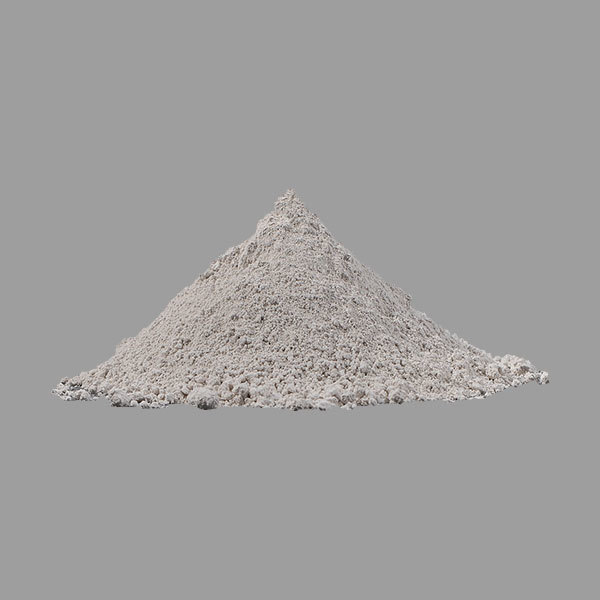
A liquid dispersing agent for ceramic body slurries, built on a single-electrolyte Na⁺ system. NaO 30–32% | SiO₂-free | P₂O₅ 0–1% | L.O.I 55–60%.
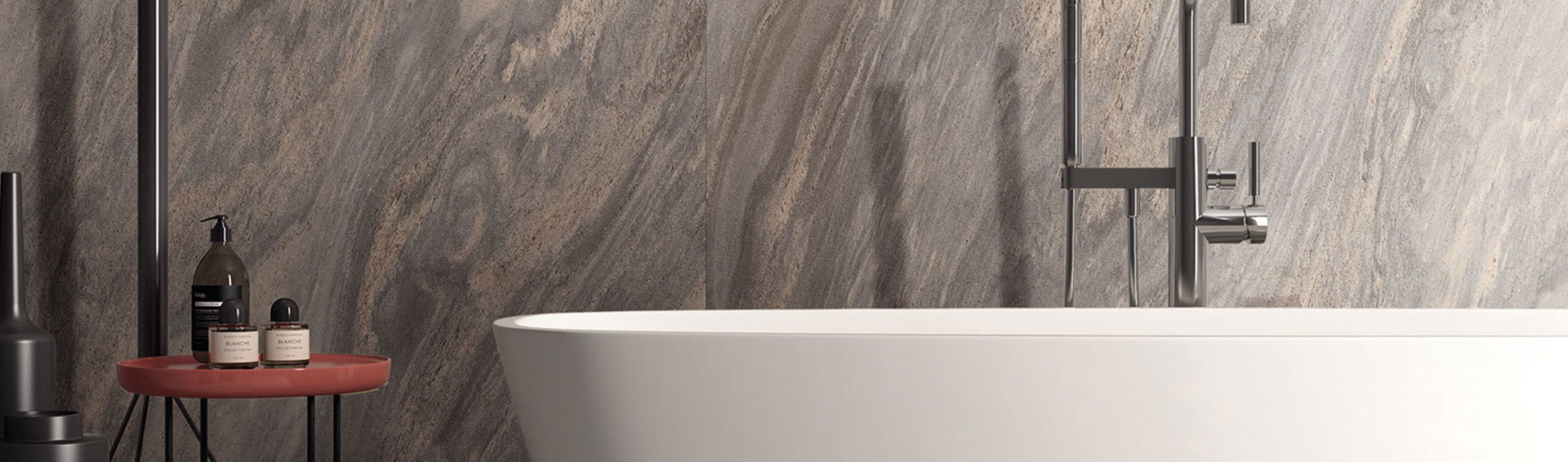
Classification: Dispersing AgentNaO 30–32% — highest in seriesNo SiO₂ componentWall Tile · Floor TileFord Cup dosage optimisation
Quick Answer: FG-2017 is the highest-NaO grade in Goway's ceramic deflocculant and dispersant range. It lowers ceramic body slurry viscosity through high-alkali Na⁺ ion exchange, displacing divalent cations from clay-particle edge sites. Because it contains no SiO₂, its action is fast but less persistent than silicate-containing grades — best suited to short-cycle milling and continuous ball-mill discharge lines where slurry is used promptly. (Source: Goway Technical Data Sheet)
FG-2017 Specifications
All values from Goway Technical Data Sheet (v2.1, 2026-05-14). Data verified by Goway Product Team.
Parameter
Value
Notes
Product Code
FG-2017Dispersant
High-NaO peptisation grade
NaO (%)
30–32
Highest alkali content in the Goway range
SiO₂ (%)
—
No silicate component
P₂O₅ (%)
0–1
Low phosphate loading on body
L.O.I (%)
55–60
Relatively dilute — dose on dry active matter
Form
Liquid
Compatible with continuous dosing systems
Classification
Dispersing Agent
Rapid peptisation, single-electrolyte action
Source: Goway Technical Data Sheet (v2.1, 2026-05-14). SOP Evidence Level 2 — Engineering Data (TDS/COA). Performance claims require Product Team sign-off before publication.
Where FG-2017 Sits in the Series
FG-2017 is one of four grades. The comparison below is provided so that grade substitution decisions are made against the correct parameter — NaO-to-SiO₂ ratio.
Product Code
Type
NaO (%)
SiO₂ (%)
L.O.I (%)
Position relative to FG-2017
FG-2017 This page
Dispersing Agent
30–32
—
55–60
Fastest response; no silicate buffering
FG-MK03 Dispersant
Dispersing Agent
12–15
20–22
55–65
Lower NaO, silicate-buffered — better for stored slurry
FG-N203B Deflocculant
Deflocculant
15–18
30–33
45–50
Highest silicate — dense body and spray-drying lines
FG-SL01A Deflocculant
Deflocculant
18–20
18–20
55–60
Balanced ratio — versatile across multiple body types
Source: Goway Technical Data Sheet (v2.1, 2026-05-14). Comparison is indicative only; actual performance depends on clay mineralogy, water quality and process conditions.
When to Choose FG-2017
Match your primary process objective to the grade. Pilot-scale verification is always recommended before full production adoption.
⚡
Goal: Rapid Dispersion Efficiency
You need maximum peptisation speed — e.g. continuous ball-mill discharge lines or short-cycle wet milling where residence time is limited.
Recommended: FG-2017 (NaO 30–32%)
🔬
Goal: Dosage Sensitivity Characterisation
You are running Ford Cup dose-response trials to establish the minimum-viscosity plateau and need a single-variable system (pure NaO, no SiO₂ interaction).
Recommended: FG-2017 (no SiO₂ baseline)
💧
Not FG-2017: Long-Term Viscosity Stability
If slurry must hold low, consistent viscosity over 12–48 hours in storage tanks — shift-based operations or weekend shutdowns — a silicate-buffered grade is the better fit.
Alternative: FG-MK03 (SiO₂ 20–22%)
🏭
Not FG-2017: High-Solids Spray-Drying
If body slurry solid content is typically >60% by weight and must stay fluid through spray-drying atomisation, maximum silicate buffering is required.
Alternative: FG-N203B (SiO₂ 30–33%)
⚖️
Not FG-2017: Multi-Body Formulation
If the same facility runs multiple tile or sanitaryware body types and needs one grade across varying clay mineralogy, a balanced ratio is more practical.
Alternative: FG-SL01A (NaO 18–20% / SiO₂ 18–20%)
🌊
Not FG-2017: Variable Water Hardness
If process water Ca²⁺/Mg²⁺ levels fluctuate and destabilise purely high-alkali systems, causing viscosity spikes between batches, choose silicate-buffered grades.
Alternative: FG-MK03 or FG-SL01A
Selection Notes are indicative only. Actual performance depends on clay mineralogy, water quality, and process conditions. Goway recommends pilot-scale verification for all new formulations. (SOP v3.0 — Level 4 claim boundary)
FG-2017 Product Detail
Positioning, mechanism, core characteristics, applications and process notes for FG-2017.
Source: Goway Technical Data Sheet (v2.1, 2026-05-14)
Core Characteristics
Highest NaO content in the Goway deflocculant/dispersant range
No SiO₂ component — clean, single-electrolyte deflocculation
Fast viscosity reduction response on clay particle surfaces
Low P₂O₅ content (0–1%); minimal phosphate loading on body
Liquid form; compatible with continuous dosing systems
Mechanism
FG-2017 acts primarily through high-alkali Na⁺ ion exchange: Na⁺ displaces Ca²⁺ and Mg²⁺ from clay-particle edge sites, collapsing the double-layer compression forces that cause flocculation. The absence of a SiO₂ component means action is fast but less persistent compared to silicate-containing grades.
Typical Applications
Wall tile body slurryFloor tile body slurryHigh-cycle ball mill linesSingle-body productionDose-response baseline trials
Process Note: Because FG-2017 contains no SiO₂, its deflocculation effect is more sensitive to water hardness. If process water Ca²⁺ exceeds ~50 mg/L, consider monitoring Ford Cup viscosity more frequently or blending with a silicate-containing grade. Dosage optimisation via Ford Cup method is recommended before production scale-up.
Dosage Determination — Ford Cup Method
A standard starting range is 0.1–0.3% by dry-clay weight. The sequence below follows Goway's recommended laboratory procedure.
Prepare the dose-response series Set up a series of slurry samples covering the range in 0.02% increments by dry-clay weight. Keep clay type, solid content and water source constant across all samples.
Measure Ford Cup flow time at each step Record flow time for every increment under identical temperature conditions. Flow time is the proxy for apparent viscosity.
Locate the minimum-viscosity plateau The optimal dose corresponds to the minimum-viscosity plateau on the dose-response curve. Plot flow time against dosage and identify the flat bottom of the curve.
Do not exceed the plateau Over-dosing beyond the minimum-viscosity point causes re-flocculation — apparent viscosity rises again as the clay system shifts past charge neutralisation. Scale to production only from the confirmed plateau dose.
Dosage units should always be referenced to dry active-matter weight (100% minus L.O.I), not solution volume — FG-2017 at L.O.I 55–60% is a relatively dilute product. (Source: Goway Technical Data Sheet)
FG-2017 — Frequently Asked Questions
Technical questions from ceramic process engineers and procurement teams. Last reviewed: May 2026.
Why does FG-2017 contain no SiO₂, and what is the consequence?
FG-2017 is a single-electrolyte system: deflocculation is driven by high-alkali Na⁺ ion exchange only, with no silicate adsorption component. The consequence is a fast viscosity-reduction response that is less persistent than silicate-containing grades, and greater sensitivity to process-water hardness. It is best suited to short-cycle milling where slurry is used promptly rather than stored for long periods.
How is the optimal FG-2017 dosage determined?
Dosage is determined through Ford Cup viscosity measurement. A standard starting point is 0.1–0.3% by dry-clay weight, adjusted in 0.02% increments. The optimal dose corresponds to the minimum-viscosity plateau on a dose-response curve. Over-dosing beyond this plateau causes re-flocculation (viscosity rise). Goway recommends preparing a full dose-response series at laboratory scale before scaling to production.
What does the L.O.I of 55–60% mean for FG-2017 dosing?
L.O.I (Loss on Ignition) for liquid deflocculants represents the weight percentage that volatilises on heating — primarily the water carrier. FG-2017 at 55–60% is a relatively dilute product. When comparing dosage rates across grades, always base calculations on dry active-matter content (100% minus L.O.I), not solution weight, to ensure equivalent active-substance addition.
Is FG-2017 suitable when process water has high hardness?
FG-2017's effect is more sensitive to water hardness because it contains no SiO₂ buffer. If process water Ca²⁺ exceeds approximately 50 mg/L, Goway recommends monitoring Ford Cup viscosity more frequently or blending with a silicate-containing grade such as FG-MK03. Pilot-scale verification is recommended before production scale-up.
FG-2017 Sample Request & Technical Enquiry
Our technical team responds within one business day. Include your body composition and process details for a more specific recommendation.
Reviewed by: Goway Technical & Quality Team | Last updated: May 2026
Data source: Goway batch COA and Goway Technical Data Sheet v2.1 (2026-05-14). All parameter values are Engineering Data (TDS/COA) — SOP Evidence Level 2. Performance claims require Product/Technical Team sign-off before publication.
About Goway: GOWAY INTERNATIONAL MATERIAL CO., LTD is a Foshan-based manufacturer of ceramic additives with over 15 years of production experience. Annual capacity: 30,000 tonnes (solid deflocculant). Goway is the first automated solid deflocculant producer in Guangdong Province. Products comply with applicable chemical handling regulations; SDS available on request.
Boundary condition: All data and selection recommendations on this page apply to FG-2017 used in ceramic body slurry applications only. Do not apply to glaze systems, sanitaryware casting slips with significantly different clay compositions, or other industrial processes without independent verification.