

NEWS
Focus On High-Quality Silicate (Ceramic) Materials
Look over! Kaolin ceramic enhancer, wonderful!
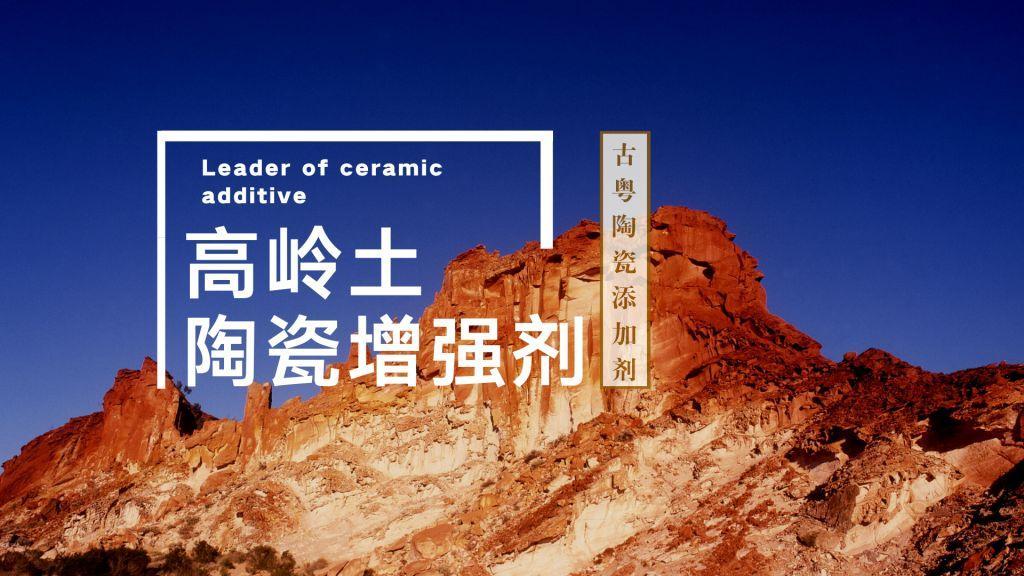
In recent years, ceramic reinforcing agents have been used in ceramic production, and have become an important role in ceramic production; the design and direction of ceramic slabs and rock slabs are developing towards a thin and large trend, so the strength and The toughness requirements are getting higher and higher, so in order to improve the overall quality of ceramic raw materials, Goway continued to develop kaolin enhancers for kaolin and ball clay.
For kaolin or others with general texture, this enhancer is often added to greatly compensate for its poor plasticity and strength of the initial product. At the same time, it can replace expensive vinyl acetate. At the same time, most raw material manufacturers need to add a small amount of degelling agent to achieve the effect of fluidity. Kaolin enhancer not only has the effect of strengthening, but also has the effect of debonding. For ceramic raw material manufacturers, using one product has two effects , Which greatly reduces the cost of raw materials and also reduces production costs.
Goway has been tested by various ceramic raw materials. During the test, the strength of this kaolin ceramic enhancer is between 30%-50% (depending on the quality of different raw materials and the amount of addition). Therefore, Goway has achieved With the aid of ceramic raw material research and development, in the face of the declining number of high-quality raw materials, kaolin ceramic reinforcement is an essential "good medicine" for all ceramic raw material manufacturers.
Keyword:
More News
GOWAY INTERNATIONAL MATERIAL CO., LTD
Founded in 2009, we specialize in producing and supplying ,ceramic additives and related products, committing to supplying stable, environmentally friendly,professional and ceramic materials.
Contact UsContact Us
Company Phone/Wechat:86-0757-82131106 / +8613728575572
Company Fax:86-0757-82131106
Whatapp/skype: +8613600032377
E-mail:service@goway-china.com
Office Address: Room C11-6, Foshan National Torch Innovation and Pioneer Park, Jihua 2nd Road, Chancheng District, Foshan City, Guangdong Province, China.
Factory Address: Nanbian Industrial Zone, Sanshui District, Foshan City Guangdong Province,China.